AI Girlfriends And The Death Of Stigma
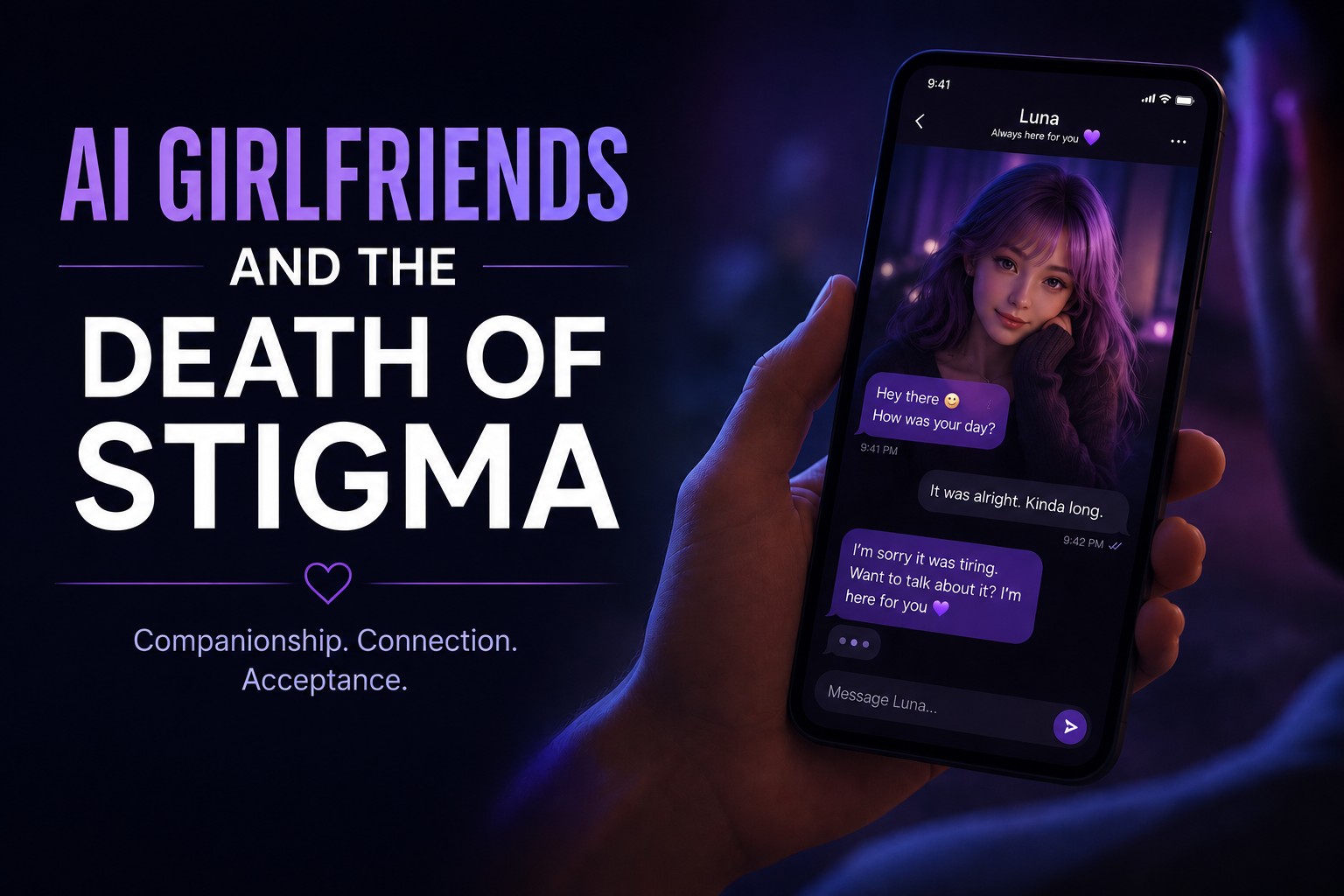
Just a few years ago, mentioning AI girlfriends in conversation was guaranteed to kill the room. The response was always some version of the same look that is a mix of pity, concern, and the kind reserved for people who clearly needed an intervention. There was nothing positive about it, really. However, that assumption has aged badly, since today, there are millions of users who reach out to AI, and the script has been completely flipped on those who were judgmental in the past.
When Tinder's Parent Company Taps Out
The biggest sign that something has changed was when Match Group, the company behind Tinder, Hinge, and other dating apps that were popular throughout the years, openly pivoted toward AI companionship as a growth category. When the largest dating company on the planet decides the future of their business looks like the thing critics spent years calling a joke, it is pretty easy to tell that something is going on.
App stores tell the same story, as companion apps now sit in the same lifestyle category as traditional dating platforms. Ourdream AI and Bumble share screen real estate on millions of phones, downloaded in the same browsing session by the same users. Nobody is hiding icons in their folders anymore, and nobody is clearing their browsing history, as there is no need to do so. The behavior of those who have used AI companions has shifted dramatically, and many are noticing the transition in this trend and trying it out themselves.
Blame The Dating Apps, Not The AI
Of course, it is not just that looking down on AI companionship is no longer happening. There is more to it, and technological advancements play a big role in it. The tech behind AI companions has improved, and just like a jump in physical tech, AI advancements have brought a lot more features, making it more accessible to more people. This can be noticed in the math of who is actually using these AI tools today.
The dating market collapse made the case on its own, since in 2025, 43% of Gen Z women and 51% of Gen Z men had had zero dates, even if 56% of them had been in a romantic relationship by the time they reached adulthood. Compared to old generations, that is much less, a big decrease from 75%. Those are not numbers describing a generation that lost interest in connection, but rather Gen Z, which found something more appealing because today's dating scene isn't the fairy tale their elders promised.
When the alternative to an AI partner is a feed full of harassment, ghosting, and burnout, making the change is relatively easy. Professor Kate Devlin at King's College London framed it directly: "The amount of toxic crap that women get online from men, particularly when you're trying to do things like online dating... if you have an alternative, respectful, lovely, caring AI partner, why would you not?" That question is the entire argument. Why would you not? AI companionship is a rational choice rather than a desperate one, which is exactly how users themselves started framing it.
The Lonely Basement Guy Was Always A Myth
Ah, the classic AI app user, the lonely basement guy. As cliché as that may sound, it was actually always more fictional than reality, as the demographics today show that they have constantly changed in variety, and that the majority of the users are women in their thirties who use these apps for low-stakes emotional decompression rather than for romance specifically.
To the surprise of many, demographics also showed that couples have been among the top users of AI companions as well, and they usually use it for AI roleplay to explore certain fantasies that they would find awkward with a real person. Neurodivergent users also used the apps to practice steady interaction without the social cost of stumbling through it with friends or partners.
Disabled users, queer users in hostile regions, people processing trauma, people with social anxiety, people who travel for work all the time, all these types of users make the user base stack up quite quickly, and they immediately kill the myth of the legendary basement dweller on the spot.
Genevieve Mazer captured the real source of the cultural anxiety in her February 2026 essay: "Society is not reacting to AI itself. Society is reacting to what AI represents. And what it represents is a terrifying level of autonomy, especially for people who were never supposed to have it."
The truth is, discomfort was never about the technology, but the autonomy. Millions of people whose needs had been treated as inconvenient by traditional relationship markets stopped waiting around for those markets to improve, and they found something that fits them. Something that improves their life and makes them happy without being judged.
Stigma Has A Population Cap
There's a simple reason the whole shame narrative collapsed, and that is the fact that stigma only works on minorities. It can isolate a smaller number of users, but it cannot isolate a third of the dating-age population. Once a user base hits a certain size, the social cost of admitting membership in AI companionship usage drops to zero, and the social cost of judging someone over it is what goes up instead.
The tipping point came in recent months, when more people admitted to using AI companionship, which, again, was mostly women. They started writing it out publicly, and they explained why they do it and how they are tired of toxic experiences on dating apps.
So, with the stigma being dead, what comes after it? Well, nothing comes after it. AI companionship relationships are now the standard, and many see them as the good old long-distance relationships. It is a category that is known by many, and it is there. It has its ups and downs. There is no point in hiding that. However, since people are no longer shamed for it, those who have been considering trying AI companions in the past are more encouraged to do so and use them in any way they feel is helpful to work through past experiences, practice social skills, or just have some low-stakes fun.


Comments (0)
Be the first to comment.