Eporner HD Sex Porn Discounts Sex Games Porn Games XXX Games Hentai Games PornStar Games 3D Porn Celebrity Sex Videos Free Porn Games
Live Sex Free Live Sex Free Sex Games Páginas Porno Nude Celebrities TikTok Porn Sex Cam Rose Toy Cams Porno AI Porn Videos
Live Sex Free Live Sex Free Sex Games Páginas Porno Nude Celebrities TikTok Porn Sex Cam Rose Toy Cams Porno AI Porn Videos

Published on 2026/03/03
THE EROTICISM OF EMMANUEL VIVIER
Emmanuel Vivier is a professional photographer based in Paris, France.His work includes series and projects focused on artistic nude and boudoir photography, where he explores the human body through carefully constructed poses and compositions that emphasize aesthetics, form, and a refined visual language that defines his photographic style.


FEATURED MODEL
ONLYFANS · FREE
Busty Molly Boop
@honeymoolly
Discover her photos, explore her content and visit her profile for free.

FEATURED MODEL
ONLYFANS · FREE
Misty Mayhem
@mistychains
Discover her photos, explore her content and visit her profile for free.





 emmanuelvivier-photo.com
ExtraBall
Act natural!
They are actresses Kenna James and Leah Gotti. Here are a couple of links where you can watch some of their scenes.
Kenna James videos
Leah Gotti videos
ExtraBall2
(Clicking on these links daily you support ALRNCN's work. They're collaborators or sponsors and, by visiting their sites, they like us even more)










THE INSTAGRAM OF THE DAY: NETA_ALCHIMISTER
Neta Alchimister
Owner & designer 👙

# Watch video and photos
You can also follow us through our INSTAGRAM ACCOUNT
ExtraBall
Round of shots
ExtraBall2







AMATEUR FLESH: THROWAWAYSAUDII
The internet has a curious way of turning ideas that seemed perfectly clear for centuries completely upside down. In the past, privacy meant keeping certain things away from prying eyes. Today, however, you can show your naked body to thousands of strangers and still remain a complete stranger to every single one of them.
And it's a pretty fascinating paradox. Some people post every day about where they have breakfast, who they're sleeping with, how much money they make, the problems they're having with their partners, and even when their next dentist appointment is. We know practically everything about their lives, even though we've never seen them naked.
And then there are those who do exactly the opposite.
People who share intimate photos, who show themselves without clothes, without any apparent insecurities, and without beating around the bush, yet reveal almost nothing about their identity, their personal story, or the circumstances that brought them there.
We know what their bodies look like, but we have no idea who they are.
A perfect example can be found on Reddit, specifically on the profile of a female user who goes by ThrowawaySaudii.

# Click here to see all the content in this post
 CamBB.xxx
We find the best live porn cams across many different cam sites like Streamate, Chaturbate, Cam4 and Stripchat.
 ChatSex.xxx
With Chat Sex you get free sex cams featuring nude cam girls you can chat with for free.

FEATURED MODEL
ONLYFANS · FREE
Foxy Uzumaki
@foxyuzumaki
Discover her photos, explore her content and access her profile for free.

RECOMMENDED SITES
 Add your site
- Erotic Beauties
- Porn Pics
- The Nip Slip
- Shocking Porn
- Erosberry
- Kanoni Net
- Babes & Bitches
- Candid Teens
- sweetlicious
Add your site💩 CrazyShit
🤪 eFukt
👉🍑 Top XXX Pictures
Bingo Porno
Best Porn Blog Sites
 Sex Games
MrPornGeek
Hardcore Porn Videos
NSFW.Tools
Sex AI Chat
ShareAnyNudes
Teenager365
Best JAV Models
Hotness
HornyFap
Best AI Porn Generation






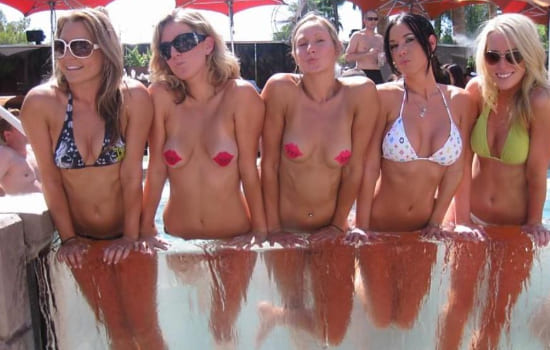










THE COLOR WHITE VOL4
And here we are: white. After an entire week talking about colors, shades, impossible names and some pretty questionable chromatic boundaries, we're finishing with the one color that seems to have decided not to take part in any of those arguments.
Because there's something funny about white: on paper, it seems like the simplest color of them all. It doesn't need to scream for attention, it doesn't have to be particularly intense, and you're unlikely to hear two guys arguing for ten minutes about whether something is pearl white, off-white, ivory or nuclear white. If it looks white, it's white as far as we're concerned, and we can peacefully get on with our lives.
But then white shows up on certain clothes and all that supposed discretion goes straight out the fucking window.
A white T-shirt, a shirt, a dress or, especially, a good piece of white lingerie can attract a hell of a lot more attention than any color specifically designed to do exactly that. Maybe because it doesn't need much decoration. Maybe because it lets the shapes do all the work. Or maybe because our relationship with colors is a lot less sophisticated than we've spent this entire week pretending it is.
Either way, after making our way through greens, blues, lilacs, reds, yellows and blacks, we've finally reached the end of the road.
And we're finishing with white. No mixtures, no complications and no need to check a Pantone chart to know exactly what the hell we're looking at.
Color week is over.
Now we can finally go back to focusing on what really matters.

# Watch videos
 You can see much more content like this on our TELEGRAM CHANNEL
How to unlock adult content on Telegram (Apple, Android, or any other device)
If you enter our channel and see an adult-content warning that prevents you from viewing anything, it means the restriction filter is enabled.
Go to https://web.telegram.org, log in, and open:
Settings → Privacy → Sensitive Content
Enable “Disable Restrictions” and you're all set.
The change will automatically sync with the Telegram app on all your devices.
ExtraBall
IT'S FRIDAY!
ExtraBall2


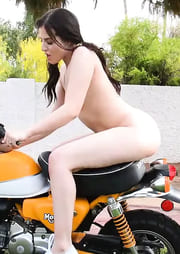





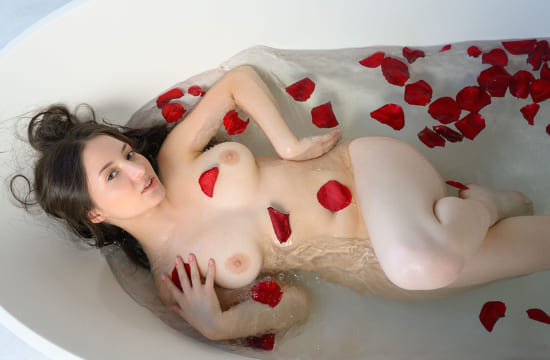
THE EROTICISM OF GALYA
Galya is a Russian-born photographer focused on the nude female body. She's focused and I'm obsessed. We already have something in common.
Her work revolves around the female nude, with elegant, carefully composed photographs where the models aren't exactly trying too hard to hide from the camera.
There's not much playing around with showing without actually showing here. There's skin, there's nudity, and there's plenty to look at, but always through photography that tries to maintain that balance between eroticism, beauty, and naturalness.
A selection of Galya's work to remind us that you can show practically everything without losing your sense of style.
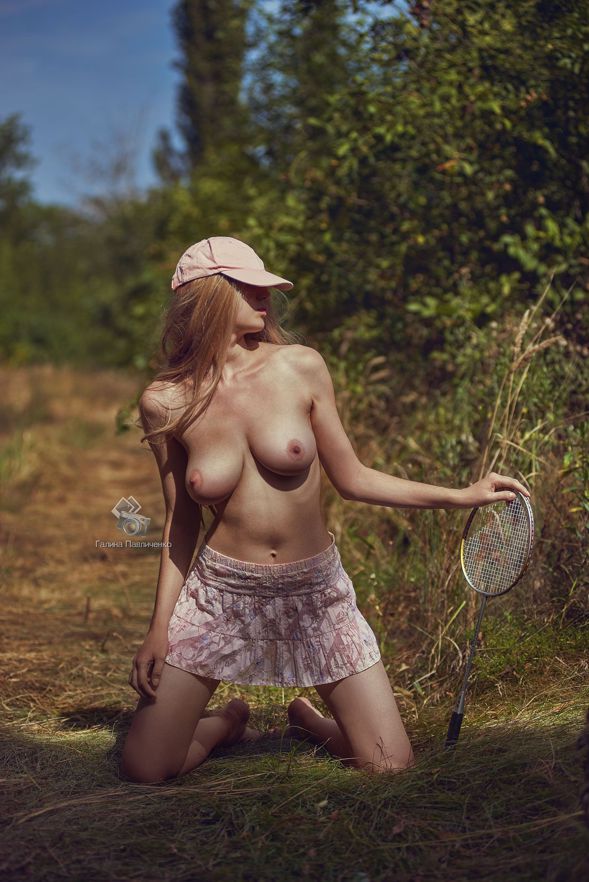
# View photos
ExtraBall
69
ExtraBall2








Contact
You can tell us whatever you want via email: [email protected]
If you prefer, you can use this contact form:
If you prefer, you can use this contact form:






THE NEW GENERATION OF REALDOLLS
The first RealDolls capable of moving on their own are already starting to appear on the market, a sort of first generation of sexual automatons that, if the industry's gamble pays off, will eventually give way to far more sophisticated dolls and, who knows, fill homes around half the world with joy, happiness and surprisingly stable relationships.
For now, though, let's not get too excited. Their movements still look a lot like the robot dance at an '80s nightclub. Yes, they move, but with the kind of stiffness that makes it pretty obvious there are motors, mechanical joints and a computer underneath the skin desperately trying to coordinate everything without making the whole thing look like an excavator starting up in the morning.
But these are just the early days.
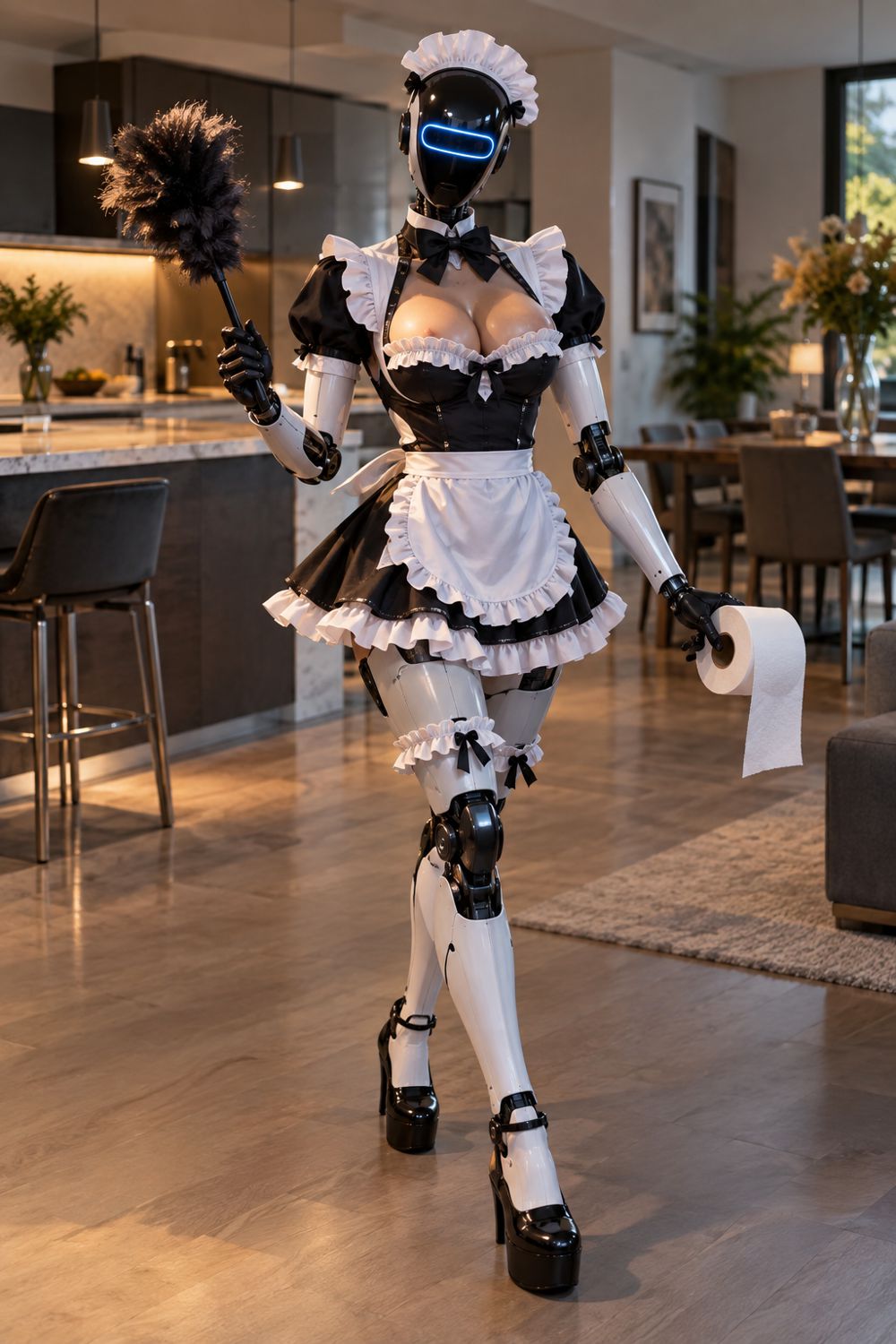
After all, fitting a RealDoll's skeleton with motorized joints, sensors and a central unit capable of interpreting voice commands and turning them into movements can't exactly be easy. And the really interesting part isn't so much what they can do now, but imagining what they'll be capable of five or ten years from now.
To put things into perspective, remember those AI-generated videos from just a few years ago showing Will Smith trying to eat spaghetti while his face melted, fingers appeared and disappeared, and the spaghetti seemed to be trying to eat him instead. We laughed because the whole thing looked ridiculous.
And look where we are now.
Something similar will probably happen with robotics. What looks clumsy, mechanical and even comical today could seem completely normal in just a few years. Smaller motors, smoother movements, better sensors, voice recognition, conversational AI, memory, personality... Every piece of that puzzle already exists separately. The real leap will come when someone manages to put them all together inside the same body and make the whole thing work reasonably well.
For decades, we've been told that robots would eventually make their way into our homes to help us with household chores: cleaning, cooking, tidying up, fetching things...
What I never imagined, not even in my wildest wet dreams, was that when they talked about robots helping around the house, they also meant lending a hand with our fantasies and vices.
Anyway. The future is already here.
It just still moves a little like RoboCop after six shots.
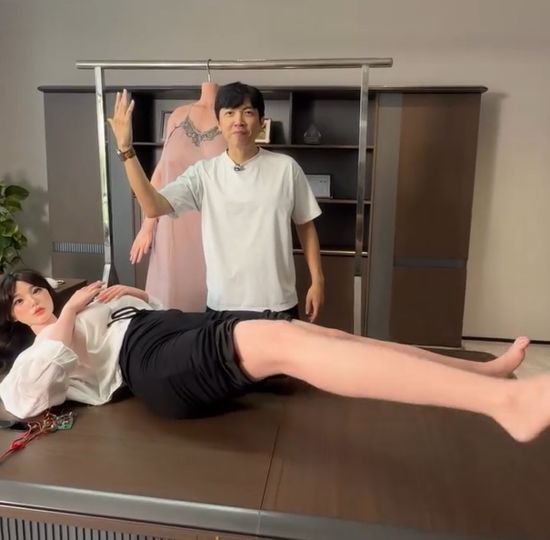
# Watch videos
ExtraBall by david
Slow motion of the day.
ExtraBall2




GIVE ME MORE KISSES
A kiss is one of the most universal and, at the same time, most ambiguous gestures in human relationships. With the same lips, we can express love, desire, tenderness, respect, gratitude, friendship, and even betrayal. And the curious thing is that, although the physical gesture is practically the same, its meaning can change completely depending on who's giving it, who's receiving it, and the circumstances surrounding it.
There's no single explanation for the origin of kissing. Some theories link it to ancient caregiving and feeding behaviors, while others emphasize the role of physical contact in forming emotional bonds. What we do know is that kissing is part of the customs of many societies, although not all cultures practice it in the same way or give it the same meaning.
And the thing is, kissing isn't exclusively a sexual behavior. In fact, many of the kisses we give throughout our lives have absolutely no erotic intention. A father kisses his child to express love and reassurance. Two friends might kiss to greet each other. Someone kisses another person's hand as a sign of respect. And two lovers might kiss to express a desire they don't even need to put into words.
The gesture may be similar, but the message changes completely.

# Click here to see the full content of this post