
Eporner HD Sex Porn Discounts Sex Games Porn Games XXX Games Hentai Games PornStar Games 3D Porn Celebrity Sex Videos
Live Sex Free Live Sex Free Sex Games Páginas Porno Nude Celebrities TikTok Porn Sex Cam RoseToy Official Cams Porno AI Porn
Live Sex Free Live Sex Free Sex Games Páginas Porno Nude Celebrities TikTok Porn Sex Cam RoseToy Official Cams Porno AI Porn

Published on 2026/09/30
AMATEUR FLESH: HONEYMELON
Our featured girl today seems to know exactly what her strongest asset is. And we're certainly not going to be the ones to disagree with her.
She doesn't need elaborate sets or particularly fancy productions. A phone, a mirror, her bedroom, and two very convincing reasons to get our attention are more than enough.
Because one look through her gallery makes it pretty clear that she knows exactly what her best features are and, more importantly, she knows how to put them front and center.
Selfies, mirrors, spontaneous poses, and that special charm amateur photos have when they seem more interested in turning people on than winning a photography award.
And hey, mission accomplished.
FUCK ANY GIRL WITH AI

# See photos and videos
ExtraBall







AMATEUR FLESH: HONEYMELON
Our featured girl today seems to know exactly what her strongest asset is. And we're certainly not going to be the ones to disagree with her.
She doesn't need elaborate sets or particularly fancy productions. A phone, a mirror, her bedroom, and two very convincing reasons to get our attention are more than enough.
Because one look through her gallery makes it pretty clear that she knows exactly what her best features are and, more importantly, she knows how to put them front and center.
Selfies, mirrors, spontaneous poses, and that special charm amateur photos have when they seem more interested in turning people on than winning a photography award.
And hey, mission accomplished.
FUCK ANY GIRL WITH AI
# See photos and videos
ExtraBall
Published on 2026/09/30
SRVIRAL #2317
When your aunt convinces you to squeeze your cousin into one of your music videos.
FUCK ANY GIRL WITH AI
You can see many more videos, curiosities and silly stuff visiting srviral.com
You can also join the SRVIRAL TELEGRAM CHANNEL to see much more content.
ExtraBall




SRVIRAL #2317
When your aunt convinces you to squeeze your cousin into one of your music videos.
FUCK ANY GIRL WITH AI
 Late |
 Schnapps |
 X3 |
 Not cool |
 Juggle |
 Recognition |
 Go get them |
 Elegant |
 Upload or download? |
You can also join the SRVIRAL TELEGRAM CHANNEL to see much more content.
ExtraBall


FEATURED MODEL
ONLYFANS · FREE
Mistress Sasha
@domsasha
Discover her photos, explore her content and visit her profile for free.

FEATURED MODEL
ONLYFANS · FREE
Sophia Reed
@fantasysophiareed
Discover her photos, explore her content and visit her profile for free.
Published on 2026/09/30
YELLOW VOL3
These days we've been following a pretty simple theme: color-coded videos. We've already been through pink, magenta, green, blue, lilac, red... and now it's yellow's turn.
Although we already know how this whole color thing works. Depending on the lighting, the screen, and how picky someone feels like being, there'll be clothes that some people see as yellow while others will swear they're closer to green, orange, gold, cream, or God knows what shade pulled straight out of a paint catalog.
So let's establish one rule to avoid wasting time: if I say it's yellow, it's yellow.
Period.
Because seriously... is the exact color of the clothes really the most important thing you want to argue about after watching the videos you're about to see?
I don't know. I think there are a few other details worth paying a lot more attention to.
FUCK ANY GIRL WITH AI

# Watch videos
 You can see much more content like this on our TELEGRAM CHANNEL
Para usuarios de Apple
Si al entrar en nuestro Canal de Telegram te aparece un mensaje de que el contenido es para adultos y no puedes ver nada, entonces es que tienes activada la protección para adultos.
Tienes que ir a la versión web del Telegram https://web.telegram.org e identificarte, si no lo estás ya. En la configuración, en la sección "Privacidad", buscar la opción "Materiales sensibles" y activar "Desactivar restricciones". En cuanto lo hagas, el ajuste se sincronizará automáticamente con el resto de tus aplicaciones, incluidas las versiones para iOS y macOS de la App Store.
A partir de ahí ya podrás entrar en todos los Canales para adultos.
ExtraBall
I accept death with honor, but never defeat 🦅🐍
ExtraBall2







YELLOW VOL3
These days we've been following a pretty simple theme: color-coded videos. We've already been through pink, magenta, green, blue, lilac, red... and now it's yellow's turn.
Although we already know how this whole color thing works. Depending on the lighting, the screen, and how picky someone feels like being, there'll be clothes that some people see as yellow while others will swear they're closer to green, orange, gold, cream, or God knows what shade pulled straight out of a paint catalog.
So let's establish one rule to avoid wasting time: if I say it's yellow, it's yellow.
Period.
Because seriously... is the exact color of the clothes really the most important thing you want to argue about after watching the videos you're about to see?
I don't know. I think there are a few other details worth paying a lot more attention to.
FUCK ANY GIRL WITH AI
# Watch videos
You can see much more content like this on our TELEGRAM CHANNEL
Para usuarios de Apple
Si al entrar en nuestro Canal de Telegram te aparece un mensaje de que el contenido es para adultos y no puedes ver nada, entonces es que tienes activada la protección para adultos.
Tienes que ir a la versión web del Telegram https://web.telegram.org e identificarte, si no lo estás ya. En la configuración, en la sección "Privacidad", buscar la opción "Materiales sensibles" y activar "Desactivar restricciones". En cuanto lo hagas, el ajuste se sincronizará automáticamente con el resto de tus aplicaciones, incluidas las versiones para iOS y macOS de la App Store.
A partir de ahí ya podrás entrar en todos los Canales para adultos.
ExtraBall
I accept death with honor, but never defeat 🦅🐍
ExtraBall2
Published on 2026/09/30
NEWCRACKSINTHEWALL VOL2
Yesterday we shared the first part of our selection dedicated to Newcracksinthewall, a photographer who uses the nude, light and space as the main ingredients of his compositions.
Today we're back with the second batch of photographs. New perspectives, bodies emerging and disappearing between light and shadow, and that same search for images that may look simple at first glance but have been carefully constructed behind the camera.
And that's where much of the appeal of his work lies: taking an apparently simple scene and giving it enough visual power to keep your eyes on it a little longer than you intended.
With this second installment, we bring our particular selection of his work to a close.
FUCK ANY GIRL WITH AI

# View photographs
ExtraBall
Snorkeling 🤿🐠
ExtraBall2




NEWCRACKSINTHEWALL VOL2
Yesterday we shared the first part of our selection dedicated to Newcracksinthewall, a photographer who uses the nude, light and space as the main ingredients of his compositions.
Today we're back with the second batch of photographs. New perspectives, bodies emerging and disappearing between light and shadow, and that same search for images that may look simple at first glance but have been carefully constructed behind the camera.
And that's where much of the appeal of his work lies: taking an apparently simple scene and giving it enough visual power to keep your eyes on it a little longer than you intended.
With this second installment, we bring our particular selection of his work to a close.
FUCK ANY GIRL WITH AI
# View photographs
ExtraBall
Snorkeling 🤿🐠
ExtraBall2

 CamBB.xxx
We find the best live porn cams across many different cam sites like Streamate, Chaturbate, Cam4 and Stripchat.
 ChatSex.xxx
With Chat Sex you get free sex cams featuring nude cam girls you can chat with for free.
 For fans who want to take the live cam experience into a headset, live VR cam sites like VRCams.io are quickly becoming the go-to for immersive, headset-ready vr cam girls.
 Anyone looking for the biggest live cam community online can head straight to Chaturbate, where thousands of performers go live around the clock.

FEATURED MODEL
ONLYFANS · FREE
Mistress Sasha
@domsasha
Discover her photos, explore her content and access her profile for free.








RECOMMENDED SITES
 Add your site
- Erotic Beauties
- sweetlicious
- The Nip Slip
- Erosberry
- Kanoni Net
- Shocking Porn
- Totally NSFW
- inhumanity
- Babes & Bitches
Add your site💩 CrazyShit
🤪 eFukt
👉🍑 Top XXX Pictures
Bingo Porno
Best Porn Blog Sites
 Sex Games
MrPornGeek
Stripchat
Hardcore Porn Videos
NSFW.Tools
Sex AI Chat
Porn Game
ShareAnyNudes
Teenager365
Best JAV Models
Hotness
HornyFap


















Published on 2026/09/30
NOW YOUR LIFE BELONGS TO ME
If I save your life, that life is no longer yours. Because you had already reached the end. Your time was up. Everything that comes after exists because I decided it would.
So if I want to play with you, I play. If I want to watch you run, you run. If I want you to suffer, you suffer. And if one day I decide the game is over, it's over.
Never forget: you're alive because I allowed you to be.
Every morning you wake up is a morning you were never supposed to have. Every hour, every minute, every breath you take is part of the extra time I gave you.
And what I gave you, I can also take away.
Now you belong to me.
You should be grateful. You should remember it every time you open your eyes: you won't die when you choose, when fate decides, or when your time comes. You'll die when I decide.
FUCK ANY GIRL WITH AI

# Watch videos
ExtraBall by david
The slow-motion shot of the day.
ExtraBall2






NOW YOUR LIFE BELONGS TO ME
If I save your life, that life is no longer yours. Because you had already reached the end. Your time was up. Everything that comes after exists because I decided it would.
So if I want to play with you, I play. If I want to watch you run, you run. If I want you to suffer, you suffer. And if one day I decide the game is over, it's over.
Never forget: you're alive because I allowed you to be.
Every morning you wake up is a morning you were never supposed to have. Every hour, every minute, every breath you take is part of the extra time I gave you.
And what I gave you, I can also take away.
Now you belong to me.
You should be grateful. You should remember it every time you open your eyes: you won't die when you choose, when fate decides, or when your time comes. You'll die when I decide.
FUCK ANY GIRL WITH AI
# Watch videos
ExtraBall by david
The slow-motion shot of the day.
ExtraBall2
VISIT OUR STORE AND TREAT YOURSELF TO A GREAT GIFT. ONLY FOR 100% ALRNCN FANS.
Published on 2026/09/30
THE BATHTUB TAP
One of the pillars of human evolution has always been our ability to invent, innovate, and find new uses for the things around us.
Because anyone can look at an object and simply use it for what it was designed for. There's nothing remarkable about that. True progress begins when someone looks at it and thinks, “What else can I do with this?”.
And that's where imagination comes into play.
Where you see a simple bathtub faucet with water running from it, someone else sees possibilities. Lots of possibilities.
Because in the end, humanity's greatest inventions have almost always started the same way: by looking at something ordinary from a completely different perspective.
You see a faucet. She sees the perfect way to get herself off. And that, my friends, is how humanity moves forward.
FUCK ANY GIRL WITH AI
# Watch videos
To watch these videos live, visit StripChat
If you want to see more content like this, visit our TELEGRAM CHANNEL
ExtraBall
The downsides of working from home.
ExtraBall2




THE BATHTUB TAP
One of the pillars of human evolution has always been our ability to invent, innovate, and find new uses for the things around us.
Because anyone can look at an object and simply use it for what it was designed for. There's nothing remarkable about that. True progress begins when someone looks at it and thinks, “What else can I do with this?”.
And that's where imagination comes into play.
Where you see a simple bathtub faucet with water running from it, someone else sees possibilities. Lots of possibilities.
Because in the end, humanity's greatest inventions have almost always started the same way: by looking at something ordinary from a completely different perspective.
You see a faucet. She sees the perfect way to get herself off. And that, my friends, is how humanity moves forward.
FUCK ANY GIRL WITH AI
# Watch videos
To watch these videos live, visit StripChat
If you want to see more content like this, visit our TELEGRAM CHANNEL
ExtraBall
The downsides of working from home.
ExtraBall2

FEATURED MODEL
ONLYFANS · FREE
Kaori Uchiha
@cosplaykaori
Discover her photos, explore her content and visit her profile for free.

FEATURED MODEL
ONLYFANS · FREE
Petite Ebony Naomi
@naomiebonyvip
Discover her photos, explore her content and visit her profile for free.
Published on 2026/09/30
FROM STUDIO STARS TO ONLYFANS CREATORS: WHY MILF CONTENT KEEPS WINNING
Every few years someone announces that a particular category of adult entertainment has peaked. And every few years, the MILF category quietly proves them wrong. It has survived the DVD era, the rise of free tube sites, the shift to mobile and, now, the growth of independent creators, and you could argue that it's stronger today than ever before. That's no coincidence. The reasons this genre works line up almost perfectly with the direction adult content is heading.
These are the reasons why this category keeps winning and what has changed over the last few years.
# Keep reading
ExtraBall
Washing off the salt.
ExtraBall2





FROM STUDIO STARS TO ONLYFANS CREATORS: WHY MILF CONTENT KEEPS WINNING
Every few years someone announces that a particular category of adult entertainment has peaked. And every few years, the MILF category quietly proves them wrong. It has survived the DVD era, the rise of free tube sites, the shift to mobile and, now, the growth of independent creators, and you could argue that it's stronger today than ever before. That's no coincidence. The reasons this genre works line up almost perfectly with the direction adult content is heading.
These are the reasons why this category keeps winning and what has changed over the last few years.
# Keep reading
ExtraBall
Washing off the salt.
ExtraBall2

Contact
You can tell us whatever you want via email: [email protected]
If you prefer, you can use this contact form:
If you prefer, you can use this contact form:

Published on 2026/09/29
ALL IN ON RED VOL7
Over the last few days, we've been making our way through a good chunk of the color chart. We've had pink, fuchsia, magenta, green, blue, lilac... and at this point, there was one we simply couldn't leave out: Red.
And thankfully, red is going to give us far fewer problems than lilac did. There's not much to argue about here. Red is red.
Yes, I know someone will now show up ready to explain that there's crimson, scarlet, vermilion, burgundy, cherry red, ruby and another thirty shades that I'm sure have extremely important differences for designers, painters and people capable of telling them apart without having to place two pieces of clothing side by side.
But we're not going to make life complicated. If you look at it and your brain says "red," then for the purposes of this post, it's red.
Besides, few colors need less explanation. Red has been doing its job perfectly well for centuries: it grabs your attention, stands out and makes you look. It's on warning signs, sports cars, lips, dresses designed to make someone turn their head as they walk past and, of course, lingerie that nobody ever buys with the intention of going unnoticed.
So after spending all these days jumping from one color to another, it was time to maintain at least some editorial consistency and make sure red didn't get left out.
You already know how this works: different girls, different videos and just one requirement to make the cut: There has to be red.
FUCK ANY GIRL WITH AI

# Watch videos You can find much more content like this on our TELEGRAM CHANNEL
How to unlock adult content on Telegram (Apple, Android, or any other device)
If you enter our channel and see an adult-content warning that prevents you from viewing anything, it means the restriction filter is enabled.
Go to https://web.telegram.org, log in, and open:
Settings → Privacy → Sensitive Content
Enable “Disable Restrictions” and you’re all set.
The change will automatically sync with the Telegram app on all your devices.
ExtraBall







ALL IN ON RED VOL7
Over the last few days, we've been making our way through a good chunk of the color chart. We've had pink, fuchsia, magenta, green, blue, lilac... and at this point, there was one we simply couldn't leave out: Red.
And thankfully, red is going to give us far fewer problems than lilac did. There's not much to argue about here. Red is red.
Yes, I know someone will now show up ready to explain that there's crimson, scarlet, vermilion, burgundy, cherry red, ruby and another thirty shades that I'm sure have extremely important differences for designers, painters and people capable of telling them apart without having to place two pieces of clothing side by side.
But we're not going to make life complicated. If you look at it and your brain says "red," then for the purposes of this post, it's red.
Besides, few colors need less explanation. Red has been doing its job perfectly well for centuries: it grabs your attention, stands out and makes you look. It's on warning signs, sports cars, lips, dresses designed to make someone turn their head as they walk past and, of course, lingerie that nobody ever buys with the intention of going unnoticed.
So after spending all these days jumping from one color to another, it was time to maintain at least some editorial consistency and make sure red didn't get left out.
You already know how this works: different girls, different videos and just one requirement to make the cut: There has to be red.
FUCK ANY GIRL WITH AI
# Watch videos
You can find much more content like this on our TELEGRAM CHANNELHow to unlock adult content on Telegram (Apple, Android, or any other device)
If you enter our channel and see an adult-content warning that prevents you from viewing anything, it means the restriction filter is enabled.
Go to https://web.telegram.org, log in, and open:
Settings → Privacy → Sensitive Content
Enable “Disable Restrictions” and you’re all set.
The change will automatically sync with the Telegram app on all your devices.
ExtraBall
Published on 2026/09/29
SRVIRAL #2316
Flashdance.
FUCK ANY GIRL WITH AI
You can see many more videos, curiosities and silly stuff visiting srviral.com
You can also join the SRVIRAL TELEGRAM CHANNEL to see much more content.
ExtraBall







SRVIRAL #2316
Flashdance.
FUCK ANY GIRL WITH AI
 Reload! |
 Chase |
 Tsunami |
 Cricket |
 Waffle |
 Seductive |
 Spins |
 Instant karma |
 Ninja |
You can also join the SRVIRAL TELEGRAM CHANNEL to see much more content.
ExtraBall
Published on 2026/09/29
WE'LL NEVER SEE THESE FUTURES
There's something pretty fucked up about thinking about the future: we'll never know how the story ends.
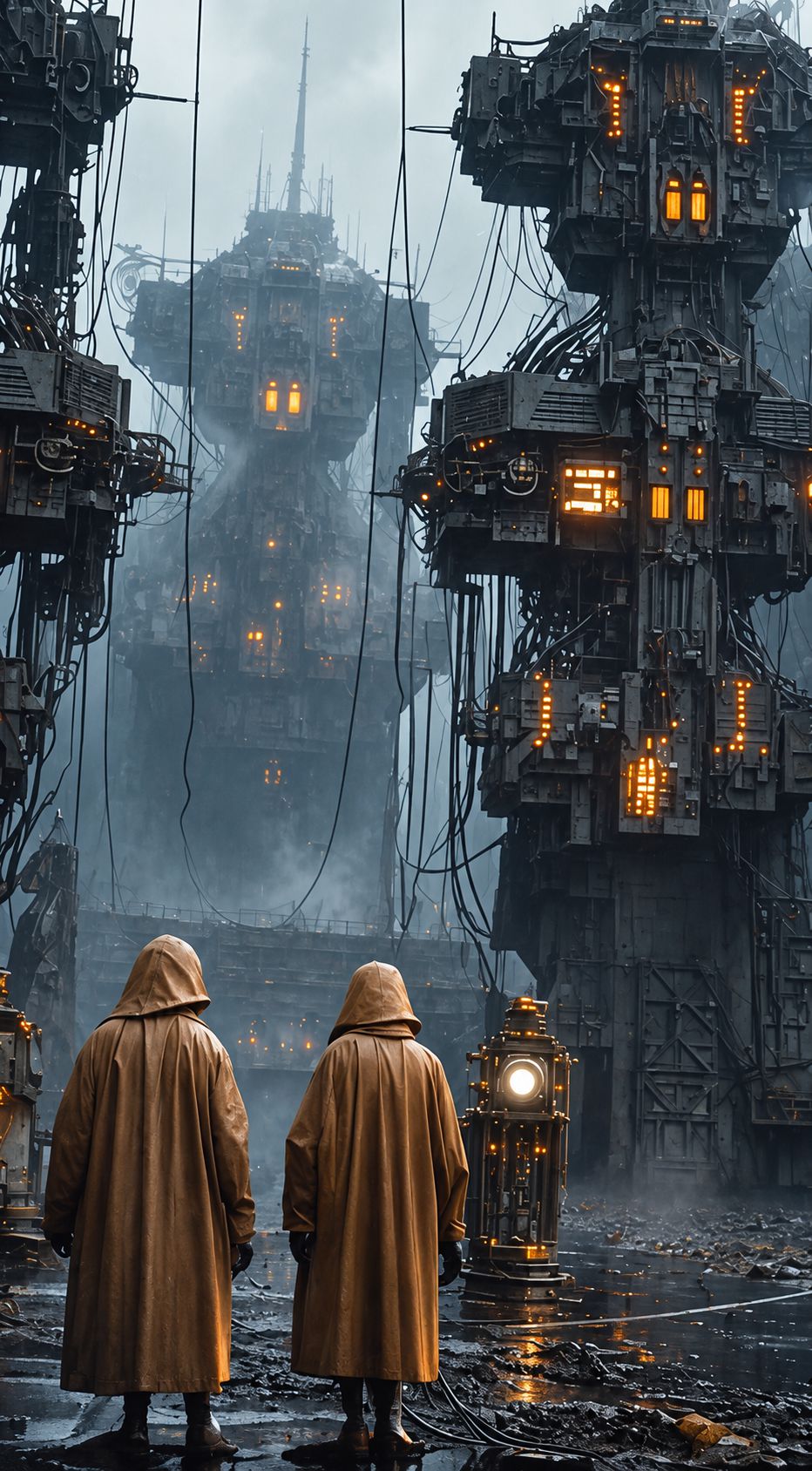
We can imagine it. We can ask artificial intelligence to build impossible cities, inhabited planets, androids, creatures from other worlds, civilizations rising among the stars... We can speculate about what humanity might look like a hundred, five hundred or ten thousand years from now.
But we won't be there to see it.
FUCK ANY GIRL WITH AI
Neither will our children. Or our grandchildren. And just a few generations later, chances are nobody will even know we ever existed. Because that's the reality for almost all of us: we're born, we live, we leave our small mark and, eventually, our name fades from memory.
Only a handful of people manage to transcend their time. People who discovered, built, created or did something important enough for us to still be talking about them centuries or even thousands of years after their death. And even their memory depends on something that isn't guaranteed either: that our civilizations survive, preserve their history and aren't one day brought down by some collapse that forces everything to start over, leaving much of the past behind.
And yet, if we're lucky enough not to wipe ourselves out first, perhaps someone carrying our blood will actually make it that far.
Some distant descendant of any one of us could be born into a world that would be completely unrecognizable to us today. Maybe they'll look back at Earth from another planet. Perhaps they'll never even set foot on our world. They might consider traveling between planets as ordinary as we consider getting on a plane today.
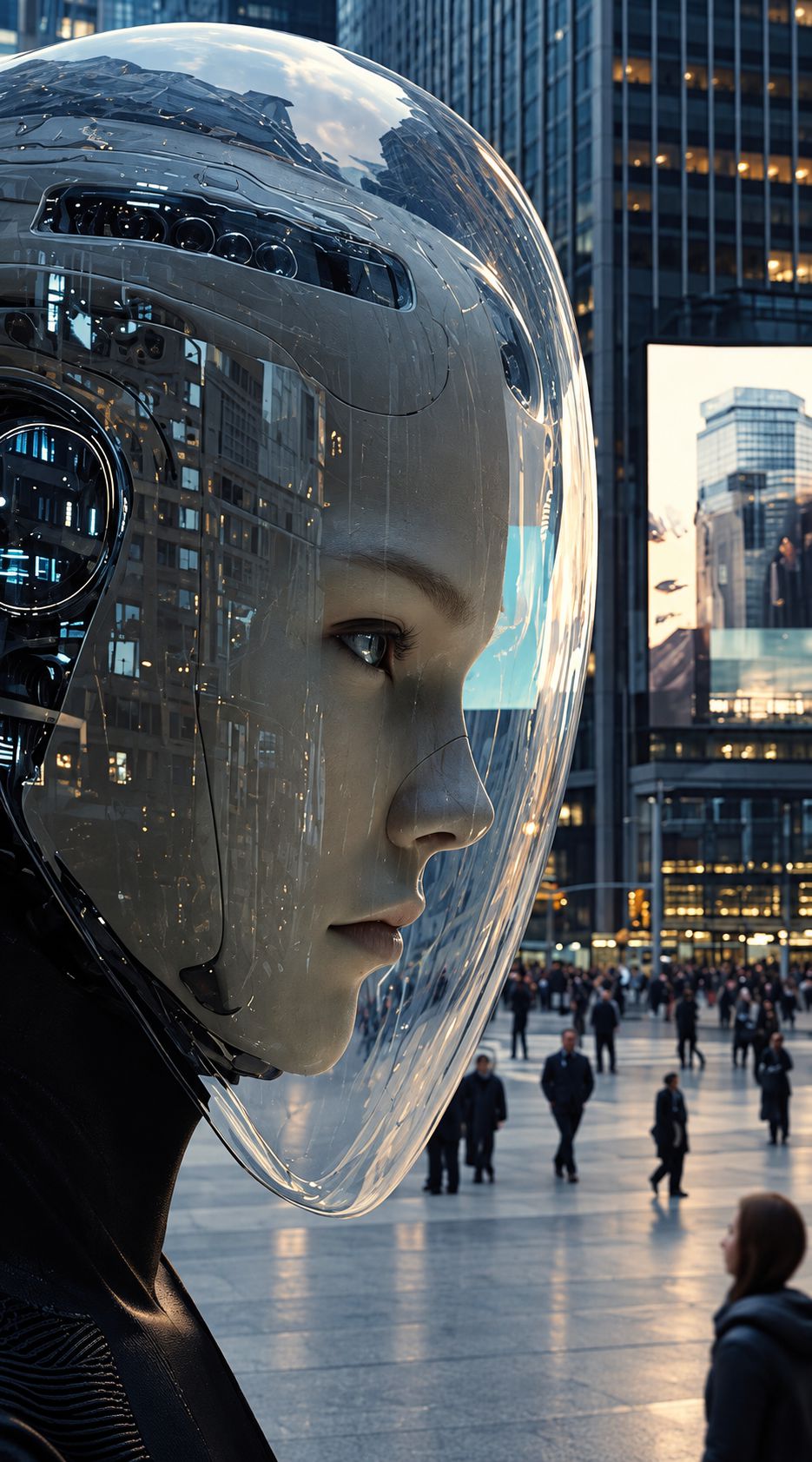
It is even possible that by then the word "human" won't mean exactly what it means to us today. Our descendants may have modified their bodies, lived alongside artificial intelligences for generations, replaced organs with technology or physically adapted to places where we would die within minutes.
And they will have ancestors too.
Us.
To them, we'll be what those first humans staring up at the sky around a fire are to us: people from an unimaginably distant past who lived without knowing anything at all about what would come after them.
And perhaps that's what's so fascinating about imagining the future. Not trying to guess what the spaceships, robots, cities or creatures that might exist one day will look like, but accepting that we're writing the opening pages of a story whose ending we'll never get to read.
The following videos were created with artificial intelligence and show futures that will probably never exist exactly like this.
But some future will.
And if we manage to survive long enough as a species, perhaps someone carrying a tiny piece of us within them will one day get to see it through our own eyes.

# Watch videos
ExtraBall
Straight from the playbook.
ExtraBall2
(Pulsando en estos enlaces diariamente, apoyas el trabajo de ALRNCN. Se trata de colaboraciones o patrocinios, y visitando sus páginas, nos haces quedar bien con ellos)







WE'LL NEVER SEE THESE FUTURES
There's something pretty fucked up about thinking about the future: we'll never know how the story ends.
We can imagine it. We can ask artificial intelligence to build impossible cities, inhabited planets, androids, creatures from other worlds, civilizations rising among the stars... We can speculate about what humanity might look like a hundred, five hundred or ten thousand years from now.
But we won't be there to see it.
FUCK ANY GIRL WITH AI
Neither will our children. Or our grandchildren. And just a few generations later, chances are nobody will even know we ever existed. Because that's the reality for almost all of us: we're born, we live, we leave our small mark and, eventually, our name fades from memory.
Only a handful of people manage to transcend their time. People who discovered, built, created or did something important enough for us to still be talking about them centuries or even thousands of years after their death. And even their memory depends on something that isn't guaranteed either: that our civilizations survive, preserve their history and aren't one day brought down by some collapse that forces everything to start over, leaving much of the past behind.
And yet, if we're lucky enough not to wipe ourselves out first, perhaps someone carrying our blood will actually make it that far.
Some distant descendant of any one of us could be born into a world that would be completely unrecognizable to us today. Maybe they'll look back at Earth from another planet. Perhaps they'll never even set foot on our world. They might consider traveling between planets as ordinary as we consider getting on a plane today.
It is even possible that by then the word "human" won't mean exactly what it means to us today. Our descendants may have modified their bodies, lived alongside artificial intelligences for generations, replaced organs with technology or physically adapted to places where we would die within minutes.
And they will have ancestors too.
Us.
To them, we'll be what those first humans staring up at the sky around a fire are to us: people from an unimaginably distant past who lived without knowing anything at all about what would come after them.
And perhaps that's what's so fascinating about imagining the future. Not trying to guess what the spaceships, robots, cities or creatures that might exist one day will look like, but accepting that we're writing the opening pages of a story whose ending we'll never get to read.
The following videos were created with artificial intelligence and show futures that will probably never exist exactly like this.
But some future will.
And if we manage to survive long enough as a species, perhaps someone carrying a tiny piece of us within them will one day get to see it through our own eyes.
# Watch videos
ExtraBall
Straight from the playbook.
ExtraBall2
(Pulsando en estos enlaces diariamente, apoyas el trabajo de ALRNCN. Se trata de colaboraciones o patrocinios, y visitando sus páginas, nos haces quedar bien con ellos)

Previous posts:
Pages: 12345678 ... 26742675267626772678267926802681 Jump to page:
What is ALRINCON
ALRINCON has been online since 2003. Back when the internet still made noise every time you connected, we were already publishing things here. What started as a personal little corner gradually evolved into a digital magazine focused on adult entertainment, internet culture, visual media, viral trends, and all that wonderful chaos that’s been floating around online for decades.This is not your typical porn website, and it never tried to be. At ALRINCON, material is selected, discussed, and given context. This isn’t just a place where videos and photos get uploaded: stories are built around them too.
Much More Than Videos or Photos
The internet is full of automated websites where material appears with no context or personality behind it. ALRINCON has always tried to do things differently.Here you'll find viral videos, posts related to erotica, compilations, models, porn, WTF material, social media phenomena, humor, curiosities, digital trends, visual culture, and online entertainment.
Porn is part of the ALRINCON universe, of course, but it’s far from the site's only driving force. Just like a magazine mixes different sections, you'll find adult material, erotic photography, surreal internet moments, social media, unusual videos, and all those little bits of online madness that show up every day.
The Editorial Style of ALRINCON
The biggest difference between ALRINCON and many other websites is that there’s a perspective behind what gets published here. The material comes from the internet, sure, but the texts are not just automated filler. They’re written with purpose: to provide context, comment on what’s happening, give personality to the site, or simply make you smile.The tone is close, often ironic, and built around a very specific identity that has been part of the site for years. Because the internet is already cold, fast, and impersonal enough without trying to look at it from a more human and entertaining perspective too.
More Than 20 Years Following the Evolution of the Internet
After more than two decades of publishing almost every single day, ALRINCON has also become a small time capsule showing how the internet itself has evolved.From the early days of blogs, forums, and webcams to the explosion of YouTube, Instagram, TikTok, Twitch, amateur material, content creators, artificial intelligence, and the latest forms of digital entertainment. The site has evolved alongside the internet, adapting to every era while never losing its original essence: discovering interesting things and sharing them in a different way.
Over all these years, millions of visits and thousands of posts have become part of the historical archive of one of the wildest, weirdest, and most fascinating eras the internet has ever lived through.
A Website With Its Own Identity
People don’t come to ALRINCON just to consume articles quickly and disappear. They come here to explore, discover new things, get entertained, and often lose themselves for a while among videos, photos, stories, and posts that probably won’t show up anywhere else.The philosophy has always been the same: trying to find visual material with something special about it. Something different. Something that stands out from the constant noise of algorithms and social media.
Because there are thousands of websites with videos. But very few have spent more than 20 years maintaining such a recognizable personality online.
Updated Daily
ALRINCON is updated daily with new videos, images, compilations, and posts related to viral entertainment, photography, humor, internet culture, social media, erotica, digital trends, and hidden gems from around the internet.And thanks to its huge historical archive, the site also lets you revisit how the internet, trends, humor, photography, and the way we consume videos and images have changed from the early 2000s to today.